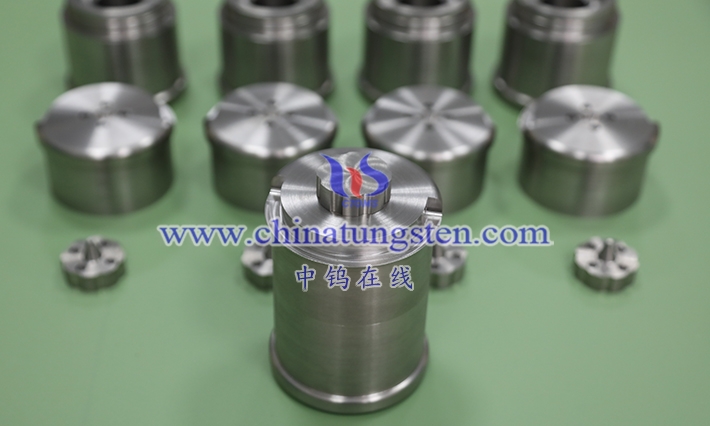
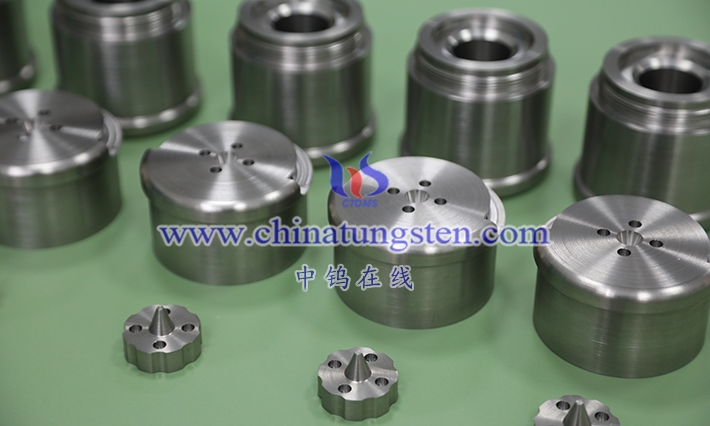
The atomic structure of tungsten forms the microscopic foundation of the shielding performance exhibited by tungsten alloy shielding containers. With its relatively high atomic number and complete inner electron shells (K, L, M), the binding energies of these shells align well with the energy ranges of common γ-rays and X-rays, resulting in elevated photoelectric absorption cross-sections in these intervals. When incident photon energy slightly exceeds a given shell binding energy, the photoelectric effect is markedly enhanced, transferring nearly all photon energy to an inner-shell electron and producing a photoelectron accompanied by characteristic X-rays of lower energy that are promptly re-absorbed by neighboring atoms. This cascaded absorption process operates efficiently within the close-packed tungsten lattice.
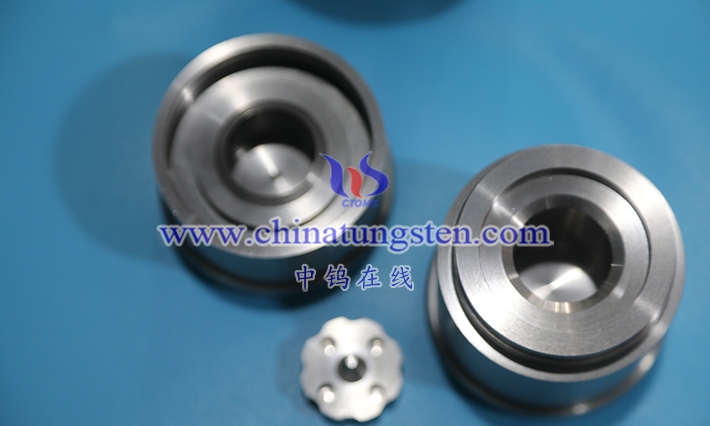
The relatively heavy tungsten nucleus and strong Coulomb field increase the probability of pair production for high-energy photons, directly converting them into electron-positron pairs that subsequently deposit energy rapidly through ionization and bremsstrahlung in the high-electron-density medium. The small atomic radius and high packing density of tungsten provide more interaction targets per unit volume, shortening mean free paths and enhancing overall attenuation for a given thickness.
For neutron interactions, the large nuclear mass of tungsten yields favorable inelastic scattering cross-sections, removing substantial neutron energy in single collisions, while high nucleon density promotes frequent elastic scattering for effective moderation. Tungsten’s low neutron activation cross-section also limits long-lived radionuclide production under irradiation.

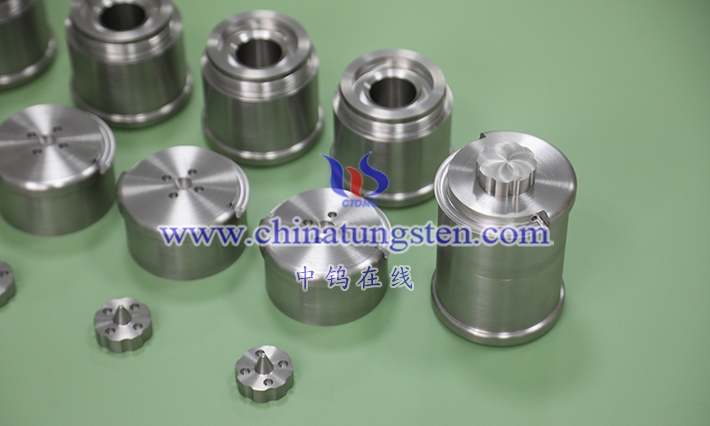
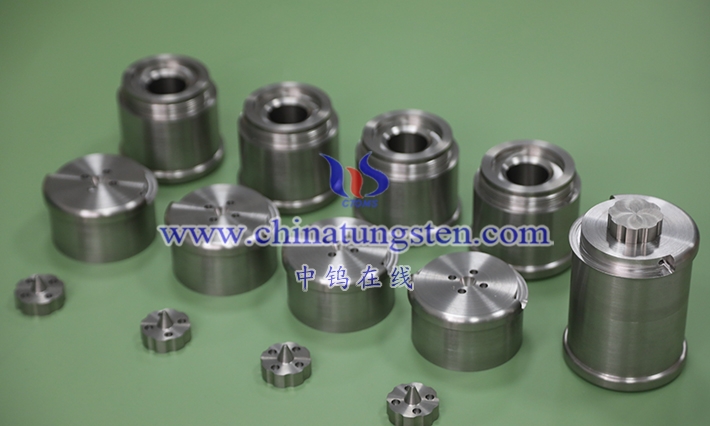
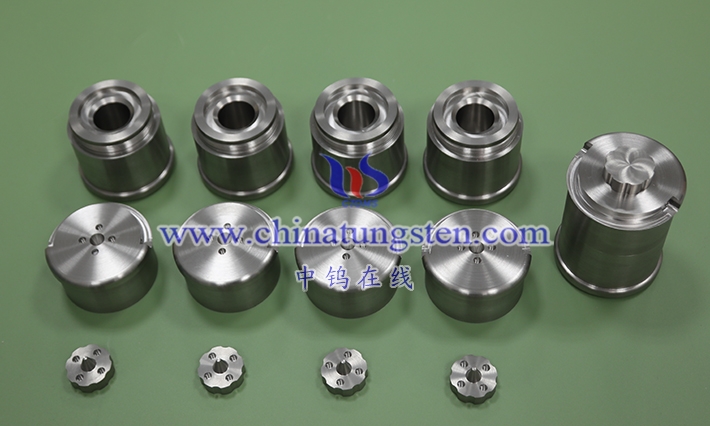
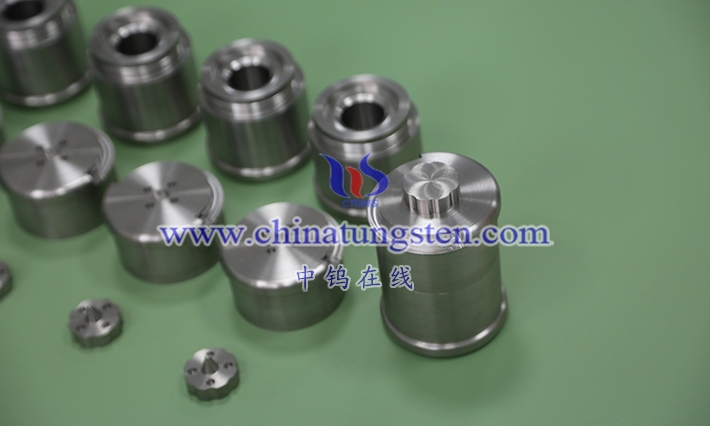
This atomic structure is fully preserved through the continuous tungsten skeleton in the alloy, with the binder phase serving primarily connection and toughening functions without substantially diluting tungsten’s shielding contribution. The direct correspondence between microscopic structure and macroscopic performance enables tungsten alloy shielding containers to deliver balanced and stable shielding across γ-ray, X-ray, and neutron fields, making them a widely adopted container material in nuclear medicine imaging, isotope production, and industrial irradiation facilities.
More details of tungstate product, please visit website: http://www.tungsten-alloy.com/index.htm
Please contact CHINATUNGSTEN for inquiry and order of tungstate:
Email: sales@chinatungsten.com
Tel.: 86 592 5129595